
Motorcycle Metric Thread Pitch Reference Chart
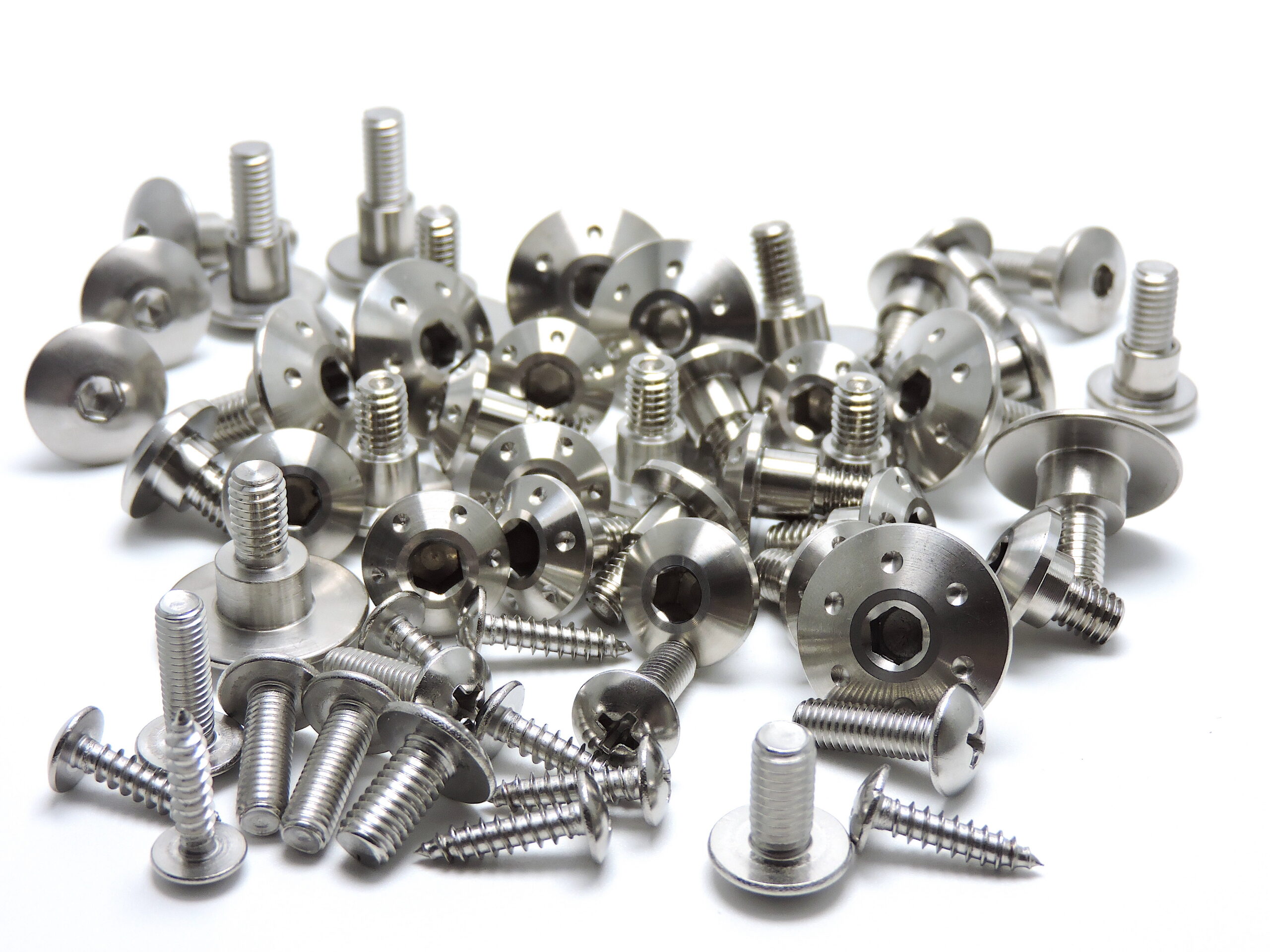
Motorcycle metric thread pitch describes the distance between adjacent threads on a metric bolt or threaded component.
Knowing the bolt diameter alone is not enough to identify a motorcycle fastener correctly.
For example, two bolts can both be M10 but use different thread pitches such as M10 × 1.5 and M10 × 1.25.
Trying to force the wrong pitch into a motorcycle component can damage both the bolt and the female thread.
This guide explains how metric thread pitch works, provides a useful motorcycle metric thread pitch reference chart and shows how to identify the thread before choosing a replacement fastener.
Motorcycle Metric Thread Pitch: The Short Answer
A metric bolt designation may look like:
M8 × 1.25 × 30 mm
This normally means:
- M8 — 8 mm nominal thread diameter.
- 1.25 — 1.25 mm thread pitch.
- 30 mm — bolt length.
Thread pitch is measured in millimetres.
The smaller the pitch number, the finer the thread.
For example:
- M10 × 1.5 has a coarser thread than M10 × 1.25.
- M10 × 1.25 has a coarser thread than M10 × 1.0.
A bolt must have both the correct diameter and the correct thread pitch.
Motorcycle Metric Thread Pitch Reference Chart
The following table shows common metric thread pitches useful when identifying motorcycle fasteners.
| Thread Diameter | Common Coarse Pitch | Common Fine / Other Pitches |
|---|---|---|
| M4 | 0.70 mm | — |
| M5 | 0.80 mm | — |
| M6 | 1.00 mm | 0.75 mm |
| M7 | 1.00 mm | — |
| M8 | 1.25 mm | 1.00 mm |
| M10 | 1.50 mm | 1.25 mm / 1.00 mm |
| M12 | 1.75 mm | 1.50 mm / 1.25 mm |
| M14 | 2.00 mm | 1.50 mm |
| M16 | 2.00 mm | 1.50 mm |
| M18 | 2.50 mm | 2.00 mm / 1.50 mm |
| M20 | 2.50 mm | 1.50 mm |
This is a general metric reference chart rather than a motorcycle fitment chart.
Other thread pitches exist, and a particular motorcycle manufacturer may use a different pitch for a specific application.
Always identify the actual fastener or confirm the manufacturer’s specification before ordering a replacement.
Banjo bolts are one motorcycle application where the same nominal thread diameter can be used with different thread pitches. An M10 banjo bolt, for example, should not be identified by diameter alone. See our Motorcycle Banjo Bolts & Copper Washers Explained guide for the additional checks required when identifying hydraulic fittings.
What Does Thread Pitch Mean?
Metric thread pitch is the distance between corresponding points on adjacent threads.
For example:
M6 × 1.0
has 1.0 mm between adjacent thread crests.
An:
M6 × 0.75
thread has only 0.75 mm between them.
The M6 × 0.75 thread is therefore finer.
Thread pitch is different from thread diameter.
Both dimensions are required to identify the thread correctly.
If you also need to check bolt length, head size or shoulder dimensions, see our How to Measure Motorcycle Bolts guide.
What Is a Coarse Metric Thread?
A coarse thread is the standard coarse-pitch series for a particular metric diameter.
Examples include:
- M5 × 0.8.
- M6 × 1.0.
- M8 × 1.25.
- M10 × 1.5.
- M12 × 1.75.
If a general engineering catalogue simply describes an M8 bolt without stating a pitch, it may be referring to the standard coarse pitch.
However, this should not be used as a shortcut when identifying motorcycle fasteners.
A motorcycle may use a fine-pitch version of the same nominal diameter.
Always check.
What Is a Fine Metric Thread?
A fine thread has a smaller pitch than the corresponding coarse thread.
For example:
M10 × 1.5 — coarse.
M10 × 1.25 — finer.
M10 × 1.0 — finer again.
A finer pitch means there are more threads over the same axial distance.
Fine threads are used in many engineering applications, including some motorcycle components.
The important point is not to assume why a particular manufacturer selected the pitch.
Use the pitch specified for that exact motorcycle and mounting point.
M6 Motorcycle Thread Pitch
A common coarse M6 metric thread is:
M6 × 1.0
A finer M6 pitch can also be:
M6 × 0.75
Therefore, identifying a bolt as simply “M6” does not always provide the complete thread specification.
If the original fastener is available, check the pitch before selecting the replacement.
M8 Motorcycle Thread Pitch
A common coarse M8 thread is:
M8 × 1.25
A common finer version is:
M8 × 1.0
An M8 × 1.0 bolt should not be forced into an M8 × 1.25 female thread, or vice versa.
Although both have approximately the same outside thread diameter, the thread spacing is different.
M10 Motorcycle Thread Pitch
M10 fasteners provide a particularly useful example of why pitch needs to be checked.
Common pitches include:
- M10 × 1.5
- M10 × 1.25
- M10 × 1.0
All three are nominally M10 threads.
They are not interchangeable.
A rider who measures only the outside diameter may therefore correctly identify the bolt as M10 but still order the wrong fastener.
M12 Motorcycle Thread Pitch
Common M12 pitches include:
- M12 × 1.75
- M12 × 1.5
- M12 × 1.25
Again, the diameter alone cannot tell you which thread is required.
Large motorcycle fasteners can also be used in highly loaded or safety-critical applications, so the complete OEM specification may include far more than thread pitch.
Material, strength grade, geometry and installation requirements can all matter.
See Motorcycle Bolt Strength Grades Explained for more information.
How to Identify Motorcycle Metric Thread Pitch
The easiest way to identify an unknown metric thread pitch is usually with a metric thread pitch gauge.
A pitch gauge contains blades or leaves with different thread profiles.
To use one:
- Clean the bolt threads.
- Select a likely pitch on the gauge.
- Place the gauge against the bolt threads.
- Check whether the teeth sit cleanly into the thread grooves.
- Try another pitch if there are visible gaps or the gauge does not seat correctly.
- Read the pitch marked on the matching gauge.
The correct blade should follow the thread profile cleanly rather than rocking across it.
Measuring Thread Pitch Without a Pitch Gauge
If a pitch gauge is not available, a ruler or vernier caliper can sometimes help provide an indication.
Rather than trying to measure the tiny gap between just two threads, measure across several thread intervals.
For example, if ten thread intervals span 10 mm:
10 mm ÷ 10 intervals = 1.0 mm pitch
Measuring over several threads reduces the effect of small measuring errors.
However, similar pitches can still be difficult to distinguish accurately this way.
Where identification matters, a metric thread pitch gauge is preferable.
Count Thread Intervals, Not Thread Peaks
When measuring across several threads, remember that the pitch is the distance from one thread crest to the next.
If you measure from the first crest to the eleventh crest, there are ten thread intervals between them.
Dividing by eleven instead of ten would give the wrong result.
This is one reason a dedicated pitch gauge is usually easier and less prone to error.
How to Check the Thread Diameter
Thread pitch should normally be identified alongside nominal thread diameter.
Use a vernier or digital caliper across the outside of the threads.
The measurement will usually be close to the nominal size.
For example:
- Approximately 5 mm → likely M5.
- Approximately 6 mm → likely M6.
- Approximately 8 mm → likely M8.
- Approximately 10 mm → likely M10.
Do not expect every used fastener to measure exactly to the nominal figure with an ordinary caliper.
Manufacturing tolerances, coatings, wear and measuring technique can all affect the reading.
Use the diameter measurement to identify the likely nominal size and then confirm the pitch.
Why the Wrong Thread Pitch Can Damage a Motorcycle
A wrong-pitch bolt may sometimes appear to begin threading into a hole.
That can be misleading.
If the pitch does not match, continuing to turn it can damage:
- The replacement bolt.
- Aluminium threads.
- Captive nuts.
- Clip nuts.
- Engine casings.
- Brackets.
- Threaded frame components.
- Other expensive motorcycle parts.
Never use a spanner or ratchet to force an apparently similar bolt into a resistant thread.
If a clean bolt does not start correctly by hand where access permits, stop and investigate.
Motorcycle Metric Threads in Aluminium
Many motorcycle fasteners screw directly into aluminium components.
Examples can include:
- Engine covers.
- Casings.
- Brackets.
- Yokes.
- Other aluminium assemblies.
Aluminium female threads can be damaged relatively easily if the wrong bolt is forced into them.
Cross-threading or using an incorrect pitch can remove or distort the internal thread.
For more information, read Motorcycle Bolts Into Aluminium: How to Avoid Damaged & Stripped Threads.
Do All Motorcycles Use the Same Metric Thread Pitches?
No.
Do not assume a particular pitch simply because a motorcycle is made by Honda, Yamaha, Suzuki, Kawasaki, Triumph, Aprilia, BMW or another manufacturer.
Motorcycles can use different pitches depending on:
- Fastener diameter.
- Component.
- Model.
- Year.
- Joint design.
- Manufacturer specification.
Even one motorcycle can contain several different thread pitches.
A general thread chart should therefore be used as an identification aid, not as proof of model-specific fitment.
Do Japanese Motorcycles Always Use Fine Threads?
No.
It is not accurate to say that Japanese motorcycles universally use fine-pitch threads.
They can use both coarse and fine metric threads depending on the application.
Statements such as “all Japanese M10 bolts are 1.25 pitch” should therefore be avoided.
Check the actual fastener or the manufacturer’s specification.
Why Might a Motorcycle Use a Fine-Pitch Thread?
Fine threads can offer different engineering characteristics from coarse threads, including a smaller lead per turn and different geometry.
However, the reason a manufacturer chose a particular pitch depends on the design of the specific joint.
Do not substitute a coarse thread for a fine thread simply because the diameter is the same.
The female thread has been manufactured for one specific pitch.
Thread Pitch Is Only One Part of the Bolt Specification
Correct thread diameter and pitch do not automatically make a replacement bolt suitable.
You may also need to check:
- Bolt length.
- Threaded length.
- Head type.
- Head dimensions.
- Shoulder dimensions.
- Washers.
- Collars.
- Spacers.
- Material.
- Strength or property class.
- Intended application.
For the complete selection process, see How to Choose the Correct Replacement Motorcycle Bolt.
Shoulder Bolts & Thread Pitch
A motorcycle shoulder bolt can have the correct thread diameter and pitch while still being the wrong replacement if its shoulder dimensions differ.
The smooth shoulder may be used to locate, support or space another component.
Therefore:
M6 × 1.0 does not fully describe a shouldered M6 fastener.
Shoulder diameter and shoulder length may also need to be matched.
See Motorcycle Shoulder Bolts Explained for more information.
Bolt Head Type Does Not Tell You the Thread Pitch
Do not identify thread pitch from the bolt head or tool size.
Allen, Torx, hex, button-head, socket-cap and flange bolts can be manufactured with many different thread sizes and pitches.
Likewise, two bolts accepting the same Allen key can have different threads.
Our Motorcycle Bolt Head Types guide explains the difference between head style and drive type.
What If the Original Bolt Is Missing?
If there is no original fastener to measure, use reliable motorcycle-specific information rather than guessing from the hole.
Useful sources can include:
- Motorcycle manufacturer’s parts information.
- Workshop manual.
- OEM part number.
- A confirmed identical fastener from the same assembly.
- Reliable model-specific technical data.
- Physical measurement of an original OEM fastener where required.
Do not assume that the apparent diameter of a threaded hole proves the required pitch.
An OEM parts diagram can identify the relevant fastener and part number, but the drawing itself does not necessarily prove the physical thread dimensions unless those dimensions are stated.
Do OEM Part Numbers Tell You the Thread Pitch?
Sometimes an OEM description or manufacturer reference may include dimensions, but not always.
Many parts catalogues identify a fastener by part number without publishing its complete thread specification.
The OEM part number is still valuable because it identifies the specific component.
That number can then be cross-referenced against reliable technical data or an original part can be physically measured where required.
Never Test an Unknown Thread by Forcing in a Bolt
Using the threaded component itself as a trial gauge can cause expensive damage.
If an unknown bolt begins to bind:
Stop.
Do not assume it merely needs more force.
Possible causes include:
- Wrong thread pitch.
- Wrong diameter.
- Cross-threading.
- Damaged male thread.
- Damaged female thread.
- Dirt or corrosion.
- Old threadlocker.
- Misalignment.
Identify the cause before continuing.
Our How to Fit Stainless Steel Motorcycle Bolts guide explains sensible installation checks.
What If the Threads Are Already Damaged?
If the original bolt or female thread is damaged, measurements can be harder to interpret.
A damaged thread may no longer accept a pitch gauge cleanly.
Where possible, compare against an undamaged section of the bolt or reliable manufacturer data.
If the fastener is seized, rounded or difficult to remove, read How to Remove Seized, Stuck & Rounded Motorcycle Bolts before applying additional force.
If the female thread itself is damaged and you are unsure how to proceed, obtain appropriate technical assistance.
Motorcycle Metric Thread Pitch & Replacement Fasteners
Before buying a replacement motorcycle bolt, confirm:
- Nominal thread diameter.
- Thread pitch.
- Bolt length.
- Threaded length.
- Head type.
- Shoulder dimensions where applicable.
- Associated washers, collars or spacers.
- Material and strength requirement.
- Intended mounting position.
The thread pitch chart on this page helps with one part of that identification process.
It should not be treated as proof that a particular fastener is correct for a particular motorcycle.
Safety-Critical Motorcycle Threads
Extra care is required when identifying fasteners used around:
- Brakes.
- Steering.
- Suspension.
- Wheels.
- Axles.
- Structural mountings.
- Other highly loaded assemblies.
For these applications, matching the diameter and pitch is not sufficient by itself.
The manufacturer may specify a particular:
- Property class.
- Material.
- Fastener geometry.
- Tightening torque.
- Locking method.
- Replacement procedure.
Follow those requirements.
Our Motorcycle Bolt Strength Grades Explained and Motorcycle Bolt Materials Explained guides explain why apparently similar bolts can have very different specifications.
Motorcycle Metric Thread Pitch: Simple Identification Checklist
When checking an unknown motorcycle thread:
- Measure the outside thread diameter.
- Identify the thread pitch with a metric pitch gauge where possible.
- Compare the result with the reference chart.
- Confirm the original bolt length.
- Check whether the fastener has a shoulder or plain shank.
- Check the head and associated hardware.
- Confirm material and strength requirements where relevant.
- Check manufacturer information for important or safety-critical applications.
- Never force a bolt that does not engage correctly.
More Biker Bling Motorcycle Fastener Guides
This motorcycle metric thread pitch guide forms part of the Biker Bling technical information library.
For guides covering bolt measurement, head types, materials, strength grades, shoulder bolts, replacement selection and correct installation, visit our Motorcycle Fastener Guides & Technical Information Hub.
You can also use our Motorcycle Fastener Glossary for explanations of terms including pitch, metric thread, coarse thread, fine thread and thread engagement.
Find Motorcycle Fasteners & Bolt Kits
Once the correct thread, dimensions and application have been identified, browse the Biker Bling range of 304 stainless steel motorcycle fasteners and model-specific bolt kits.
Shop Biker Bling Motorcycle Fasteners →
Technical information prepared and reviewed by Biker Bling Limited. Learn how we research, measure and verify motorcycle fasteners.
Technical Information Disclaimer
Always check the individual product listing for exact motorcycle fitment, year coverage and hardware supplied.
The information on this page is provided as general educational guidance about metric motorcycle threads and thread-pitch identification.
The thread-pitch chart is a general metric reference and does not establish the correct fastener specification for a particular motorcycle or mounting position.
It is not intended to replace the motorcycle manufacturer’s workshop manual, parts information, component manufacturer’s instructions or advice from a suitably qualified motorcycle technician.
Motorcycle fasteners can differ in thread pitch, dimensions, material, strength, geometry and intended function even where they appear similar.
Always confirm that a replacement fastener is suitable for the particular motorcycle and application before installation.
Where the motorcycle or component manufacturer specifies a particular thread, fastener type, material, strength, locking method or installation procedure, follow those requirements.
Particular care should be taken with braking, steering, wheels, suspension and other safety-critical components.
If you cannot positively identify the required thread or fastener specification, stop and obtain appropriate technical advice rather than forcing an uncertain replacement.
Nothing on this page is intended to affect your statutory rights or to exclude or restrict any responsibility that cannot lawfully be excluded or restricted.