
The Ultimate Guide to Fitting Stainless Steel Motorcycle Bolts & Torque Settings
Fitting stainless steel motorcycle bolts is a great way to replace tired, corroded or rusted factory fasteners while improving the appearance of your motorcycle and providing excellent corrosion resistance.
However, correct installation is important. Stainless steel fasteners have different characteristics from some original equipment fasteners, and particular care should be taken when installing them into aluminium components such as engine casings.
One of the most important things to understand is that lubricants, anti-seize compounds and other thread treatments can affect the relationship between tightening torque and the clamping force produced by a fastener.
For this reason, you should always check the motorcycle manufacturer’s workshop manual and any instructions supplied with the lubricant or anti-seize product before installation.
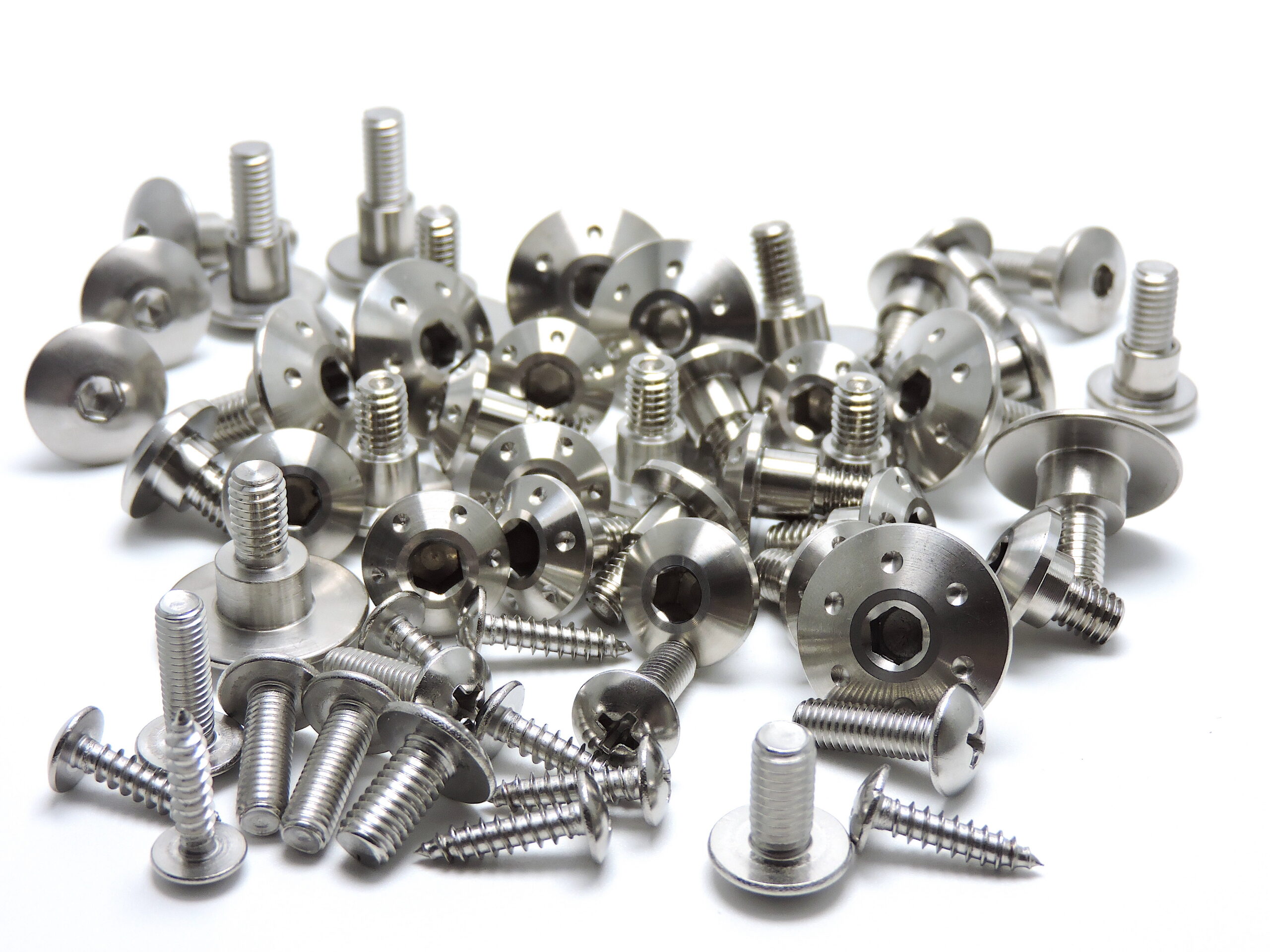
Thread Galling, Seizing & Dissimilar Metals
Stainless steel fasteners can be susceptible to galling or seizing.
Galling occurs when friction and adhesion between metal surfaces cause material to transfer between the threads. If a fastener begins to seize, forcing it can damage the bolt or the threaded component.
Installing stainless steel fasteners into aluminium components can also raise concerns about corrosion between dissimilar metals, particularly where moisture or road salt is present.
Should You Use Anti-Seize?
A suitable anti-seize compound or assembly lubricant may help reduce galling, seizing and corrosion in appropriate applications.
However, anti-seize should not automatically be applied to every motorcycle fastener.
Always check the motorcycle manufacturer’s workshop manual and the instructions supplied with the lubricant or anti-seize product.
Do not apply anti-seize or grease where the manufacturer specifies dry threads or requires a different thread treatment such as threadlocker.
How Anti-Seize & Lubricants Affect Torque
Motorcycle torque specifications are based on particular fastener and assembly conditions.
Lubricants and anti-seize compounds can reduce friction in the threads and underneath the bolt head or nut.
A torque wrench measures the turning force applied to the fastener. It does not directly measure the clamping force produced by the joint.
Reducing friction can therefore result in greater fastener tension and clamping force at the same indicated torque.
Applying lubricant to a fastener and then tightening it using a torque specification intended for dry threads could result in excessive fastener tension or clamping force. This may damage the fastener or component.
Don’t Use a Universal Torque Reduction
You may find advice online suggesting that a dry torque specification should simply be reduced by a fixed percentage when anti-seize or lubricant is used.
We do not recommend using a universal percentage reduction.
Different anti-seize compounds and lubricants have different friction characteristics. The correct tightening procedure can also depend on the fastener material, thread size, joint design and component.
Instead, refer to:
- The motorcycle manufacturer’s workshop manual
- The anti-seize or lubricant manufacturer’s instructions
- Any component-specific fitting instructions
If the lubricant manufacturer provides a torque coefficient or adjustment guidance, consider this together with the motorcycle manufacturer’s requirements.
If you cannot establish the correct thread condition or tightening procedure, seek advice from a suitably qualified motorcycle technician before proceeding.
Always Check the Motorcycle Workshop Manual
The motorcycle manufacturer’s workshop manual should be your primary reference when installing fasteners.
Check the manual for:
- The correct torque specification
- Whether threads should be dry or lubricated
- Whether threadlocker is required
- The correct tightening sequence
- Whether the original fastener is intended for single use
- Any model-specific installation requirements
Never assume that a torque specification from another motorcycle, component or bolt size applies to your application.
Take Extra Care With Safety-Critical Fasteners
Fasteners associated with braking, steering, wheels and suspension require particular care.
Examples include:
- Brake caliper mounting bolts
- Other brake system fasteners
- Wheel and axle fasteners
- Front and rear spindle or axle fasteners
- Spindle or axle pinch bolts
- Top and bottom yoke or triple-clamp fasteners
- Steering fasteners
- Suspension fasteners
- Other fasteners where failure could affect control of the motorcycle
For these applications, always follow the motorcycle manufacturer’s fastener requirements, installation procedure, thread condition, tightening sequence and torque specification.
Do not substitute general online torque advice, lubricant advice or percentage reductions for the manufacturer’s instructions.
If you are unsure whether a stainless steel fastener is suitable for a safety-critical application, do not install it until you have confirmed its suitability.
If you are uncertain about the installation procedure, ask a suitably qualified motorcycle technician for advice.
Fitting Stainless Steel Motorcycle Bolts: Clean & Inspect Before Installation
Before installing replacement fasteners:
- Check that the fastener has the correct size, thread pitch, length and specification for the application.
- Inspect the threaded hole and mating threads for damage, corrosion or contamination.
- Clean the threads where appropriate.
- Check the motorcycle manufacturer’s instructions for the required thread condition.
- If anti-seize, lubricant or threadlocker is required or permitted, use a suitable product and follow its manufacturer’s instructions.
- Start the fastener by hand where possible to reduce the risk of cross-threading.
- Tighten the fastener using the procedure and torque specification applicable to the particular motorcycle and component.
- Where a specified torque is required, use a suitable and correctly functioning torque wrench within its intended operating range.
Never force a fastener that does not thread smoothly. Stop and check the thread size, pitch, alignment and condition before proceeding.
Stainless Steel Fasteners & Original Equipment Specifications
Stainless steel fasteners are commonly chosen for their appearance and excellent corrosion resistance, but stainless steel is not automatically a suitable replacement for every original motorcycle fastener.
Original equipment fasteners may have specific strength grades, materials, designs or other requirements determined by the motorcycle manufacturer.
Before replacing an original fastener, particularly in a safety-critical application, make sure the replacement fastener is suitable for its intended use.
Do not replace a manufacturer-specified high-tensile, special-purpose or safety-critical fastener with a stainless steel fastener solely because its size, thread and dimensions appear to match the original.
Important Safety Information
This guide provides general informational and educational guidance only regarding the installation of stainless steel motorcycle fasteners. It is not a substitute for the motorcycle manufacturer’s workshop manual, component-specific fitting instructions or professional mechanical advice.
Motorcycle models, fastener applications, materials, strength requirements, thread conditions, lubricants, tightening procedures and tool calibration can vary. Always check the manufacturer’s instructions applicable to your particular motorcycle and component before installation.
Biker Bling does not provide model-specific torque specifications through this general guide and does not recommend applying a universal percentage adjustment to manufacturer-specified torque values.
Before installation, ensure that any replacement fastener is suitable for its intended application. If you are uncertain about fastener suitability, thread treatment, tightening procedure or torque specification, do not proceed until you have obtained advice from a suitably qualified motorcycle technician.
Incorrect fastener selection or installation can result in component damage or mechanical failure and, particularly where braking, steering, wheel or suspension components are involved, could result in serious injury.
Nothing in this guide is intended to exclude or restrict any legal rights or any liability which cannot lawfully be excluded or restricted.
When fitting stainless steel motorcycle bolts, take your time and always follow the motorcycle manufacturer’s specifications for fastener suitability, thread condition, tightening procedure and torque.
Find Stainless Steel Bolt Kits for Your Motorcycle
Ready to upgrade your motorcycle? Browse our range of stainless steel motorcycle bolt kits, with kits available for a wide range of makes, models and applications.
From engine and fairing fasteners to yoke, axle, brake and other motorcycle bolt kits, use our shop to find the parts available for your bike.