
Inside Biker Bling: Our Workshop, Bikes & How We Work
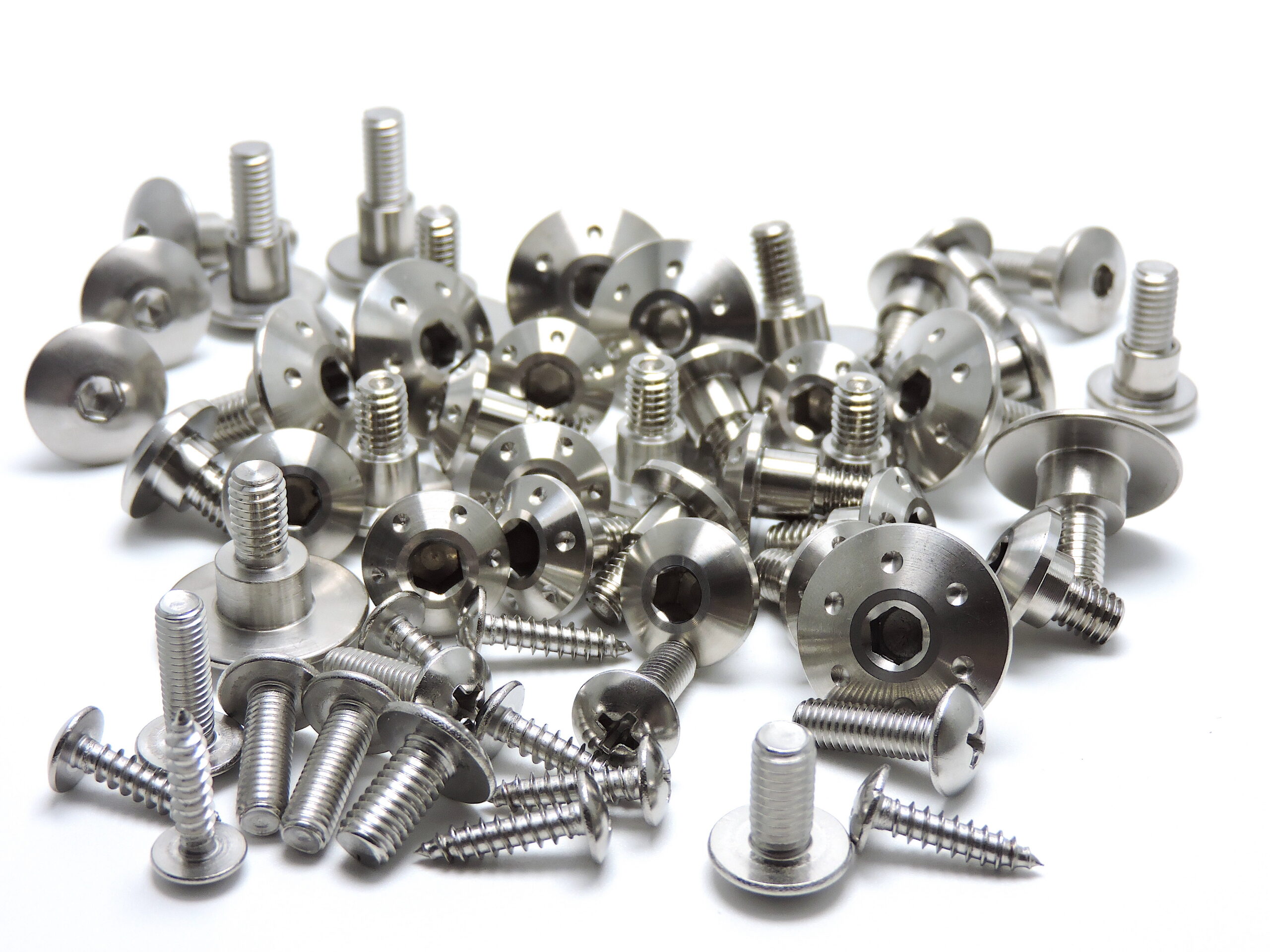
Inside Biker Bling, a model-specific motorcycle bolt kit starts with something much more important than choosing a bag of stainless steel bolts.
It starts with identifying what the motorcycle actually uses.
That can involve studying OEM parts information, checking original part numbers, comparing different model years, measuring genuine components where dimensions are not published, checking our existing fastener data and carrying out practical fitting checks where appropriate.
Our approach is simple:
Identify it. Research it. Measure it where required. Test it in the real world where appropriate. Verify it. Label it. Do not guess.
What Is Biker Bling?
Biker Bling Limited is a UK motorcycle-fastener business specialising in stainless steel replacement bolts, individual fastener sets and model-specific motorcycle bolt kits.
We have been selling motorcycle products for many years and have sold more than 68,000 items through eBay.
Over that time, we have received tens of thousands of positive customer feedback ratings.
But sales numbers are only part of the story.
The work behind the products is what this page is about.
Why We Build Model-Specific Motorcycle Fastener Kits
A motorcycle can contain hundreds of fasteners.
Even within one bodywork panel or engine assembly, manufacturers may use bolts that look very similar but differ in:
- Diameter.
- Thread pitch.
- Overall length.
- Threaded length.
- Head diameter.
- Head style.
- Shoulder length.
- Washer arrangement.
- Collar or spacer.
- Material.
- Strength requirement.
- Intended position.
That is why we do not treat a motorcycle bolt as simply:
“M5”, “M6” or “M8”.
The complete fixing arrangement matters.
Our Generic Motorcycle Bolt Kits vs Model-Specific Kits guide explains why this distinction can be important.
We Start With the Motorcycle, Not the Bolt Box
When developing or checking a model-specific product, the starting point is the motorcycle and its original specification.
Depending on the product, this can involve researching:
- Motorcycle manufacturer.
- Model.
- Model year.
- Variant.
- VIN or production changes where relevant.
- Component or assembly.
- OEM part number.
- Diagram reference.
- Quantity used.
- Associated washers, clips, collars or spacers.
This helps establish what the original fixing is actually doing before deciding what replacement hardware is appropriate.
OEM Parts Information Is an Important Starting Point
Original manufacturer parts catalogues and exploded diagrams can provide valuable information about how a motorcycle is assembled.
They can help identify:
- OEM part numbers.
- Component locations.
- Quantities.
- Related fixings.
- Year changes.
- Washers.
- Collars.
- Well nuts.
- Clips.
- Grommets.
- Sleeves.
- Rivets.
But a parts diagram does not automatically tell us everything.
For example, a drawing may show a bolt and provide an OEM number without stating:
- Exact thread pitch.
- Bolt length.
- Shoulder length.
- Head diameter.
- Other dimensions needed to identify a suitable replacement.
That is where additional research and physical measurement can become important.
We Do Not Treat an Exploded Diagram as Proof of Every Dimension
An OEM parts drawing is excellent for establishing where components are located.
It is not necessarily a dimensioned engineering drawing.
A bolt that appears long in an illustration is not automatically a particular length.
Likewise, the drawing alone may not establish:
- Shoulder diameter.
- Head diameter.
- Thread pitch.
- Exact spacer thickness.
We do not estimate dimensions from how a component looks in an exploded diagram.
If a critical measurement is not supported by reliable information, it needs further checking.
We Buy Original Parts When Measurements Need Verifying
Where important dimensions are not available from the available technical information, Biker Bling may obtain the genuine OEM component so that it can be physically checked.
Depending on the fastener, measurements can include:
- Thread diameter.
- Thread pitch.
- Overall length.
- Threaded length.
- Shoulder length.
- Head outside diameter.
- Flange diameter.
- Head style.
- Other relevant physical features.
This is particularly useful for unusual motorcycle fasteners where an ordinary industrial bolt does not reproduce the original geometry.
Shoulder Bolts Need Particular Attention
Shoulder bolts are a good example of why measurement matters.
A motorcycle manufacturer may use a bolt with a smooth unthreaded shoulder that:
- Locates a component.
- Passes through a grommet.
- Works with a collar.
- Provides a bearing surface.
- Controls clamping depth.
Replacing it with a fully threaded bolt simply because the diameter and overall length appear correct can change how the assembly works.
Our Motorcycle Shoulder Bolts Explained guide explains this in more detail.
We Maintain Our Own Fastener Information
Over years of working with motorcycle fasteners, Biker Bling has built up its own model and part-number information.
This can include practical details such as:
- Thread diameter.
- Bolt length.
- Shoulder length.
- Head dimensions.
- Head style.
- OEM references.
- Model and year information.
- Replacement choices.
- Kit grouping knowledge.
That information is extremely useful, but we do not treat any database as incapable of containing an old mistake.
If new OEM evidence conflicts with existing information, the correct response is to investigate the difference rather than automatically assuming either source is right.
Why We Cross-Check Information
Motorcycle parts information can change across:
- Model years.
- Production dates.
- VIN ranges.
- Markets.
- ABS and non-ABS versions.
- Revised assemblies.
A fastener used on a 2022 motorcycle may have a different OEM number from the fastener used on the 2023 version even when the physical replacement turns out to be the same.
Conversely, two motorcycles that look almost identical can use different hardware.
That is why broad year ranges should be checked rather than assumed.
We Have Found & Corrected Old Information Through This Process
Checking information properly is useful precisely because it can reveal mistakes.
Our research process has identified situations where:
- An old recorded bolt diameter was incorrect.
- An old bolt length needed correcting.
- An OEM part number changed between model years.
- A fixing had previously been overlooked.
- Two neighbouring assemblies had been grouped incorrectly.
Finding a discrepancy is not something to hide.
It is a reason to investigate and improve the product data.
The objective is not to prove that our existing information was always right. The objective is to make it more accurate.
We Look at the Actual Mounting Point
A parts list alone can be misleading if it is read without understanding the drawing.
One OEM diagram may contain fasteners used for:
- The target component.
- A supporting bracket.
- A neighbouring component.
- A cable clip.
- A sensor.
- An internal part.
We therefore look at where the fastener is actually used rather than assuming every bolt listed on a particular page belongs in the same customer kit.
This becomes especially important on complicated assemblies such as:
- Fairings.
- Engine casings.
- Fuel tanks.
- Cockpit areas.
- Rear bodywork.
- Brake systems.
OEM Catalogue Grouping & Customer Kit Grouping Are Not Always the Same
Motorcycle manufacturers organise parts catalogues around their own assemblies.
Customers do not always think about the motorcycle in the same way.
A rider may reasonably expect a fixing beside the belly pan to be included in a belly-pan kit even if the manufacturer happens to show that bolt on an adjacent exhaust parts diagram.
Where appropriate, Biker Bling separates:
Where the OEM catalogue shows the component
from:
Which Biker Bling kit makes the most practical sense for the customer.
Any such grouping should still be deliberate and supported by the actual location of the fixing.
We Check More Than Just Bolts
A motorcycle fixing often contains several components.
Depending on the application, we may need to consider:
- Washers.
- Rubber well nuts.
- Grommets.
- Collars.
- Spacers.
- Clip nuts.
- Spring clips.
- Plastic rivets.
- Captive nuts.
- Sealing washers.
A new bolt does not solve a mounting problem if the supporting well nut, clip or collar is wrong.
This is particularly important on motorcycle bodywork.
Our Motorcycle Fairing Fasteners Explained guide shows how these components work together.
Physical Fitting Checks Where Appropriate
Research and measurements can tell us a great deal, but there are situations where a practical fitting check provides additional useful information.
Selected Biker Bling products have been physically fitted and checked on a motorcycle made available to us for product-development and fitting checks.
This can help us examine things such as:
- Whether the selected bolt fits the intended position.
- Whether the head clears surrounding components.
- Whether shoulders and spacers locate correctly.
- Whether bodywork sits correctly.
- Whether the kit grouping makes practical sense during installation.
- Whether the supplied hardware corresponds with the actual mounting points.
The motorcycle used for these checks is made available to Biker Bling for the work; we do not describe it as a motorcycle owned by the company.
Practical Fit Checks Are Not Laboratory Strength Testing
It is important to be clear about what a real-world fitting check proves.
A physical fitting check can help confirm:
- Dimensions.
- Location.
- Clearance.
- Assembly.
- Practical installation.
- Product grouping.
It does not automatically prove:
- Tensile strength.
- Fatigue life.
- Engineering equivalence to every OEM fastener.
- Suitability for every safety-critical application.
We do not describe normal workshop fitting checks as formal laboratory testing.
Not Every Biker Bling Product Is Physically Test-Fitted
Biker Bling covers a large range of motorcycles and products.
It would be unrealistic to claim that every individual kit has been physically fitted to every motorcycle and every model year.
We therefore use several forms of evidence depending on the product, including:
- OEM parts information.
- Existing Biker Bling data.
- Genuine fastener measurements.
- Cross-model part-number comparison.
- Physical checks where appropriate.
- Other supporting information where necessary.
Where physical verification is needed before we can confidently resolve something, that should be treated as a check rather than guessed.
Our No-Guessing Rule
One of the most important principles behind our product development is simple:
Unknown information should remain unknown until it can be checked.
We would rather mark something for further verification than invent:
- A bolt length.
- A thread pitch.
- A shoulder size.
- A quantity.
- An OEM reference.
- A year range.
- A fitting position.
A confident-looking guess is still a guess.
Model Year Changes Matter
Motorcycle manufacturers can revise components during a model’s production life.
Changes can involve:
- OEM part numbers.
- Fastener dimensions.
- Mounting brackets.
- Bodywork.
- ABS layouts.
- Engine covers.
- Other hardware.
This is why a product described as fitting a broad year range should have that coverage checked rather than inferred from appearance alone.
Where a genuine model-year difference exists, our underlying product information should preserve that difference even if the same Biker Bling replacement happens to fit both versions.
We Separate Ordinary & Safety-Critical Fasteners
Not every motorcycle bolt should automatically be replaced with stainless steel.
There are many suitable applications where 304 stainless steel provides useful corrosion resistance and a clean appearance.
But some motorcycle fasteners have important material or mechanical-strength requirements.
Examples can include certain:
- Brake caliper mounting bolts.
- Brake disc bolts.
- Wheel and axle fasteners.
- Suspension fasteners.
- Steering components.
- Highly loaded clamps.
- Special engine fasteners.
- Hydraulic brake hardware.
These applications require additional consideration.
Matching the diameter, pitch and length does not automatically prove that a stainless replacement has the mechanical properties required for the job.
See Motorcycle Bolt Materials Explained and Motorcycle Bolt Strength Grades Explained for more information.
Why 304 Stainless Steel Is Used Across Much of Our Range
Biker Bling uses 304 stainless steel for many suitable motorcycle replacement-fastener applications.
304 stainless is part of the A2 stainless family commonly used for fasteners.
It provides useful corrosion resistance and is well suited to many appropriate motorcycle applications such as selected:
- Bodywork fixings.
- Screens.
- Engine-cover fasteners.
- Brackets.
- Controls.
- Cosmetic external hardware.
However, we do not use the phrase “stainless steel” as a blanket justification for replacing every original bolt on a motorcycle.
The application still matters.
We Source Products From Manufacturers Internationally
Biker Bling sources fasteners and related components from manufacturers in different parts of the world.
Where we consider adding a product to the range, the aim is not simply to find something that looks similar to the original.
We consider the characteristics relevant to the intended product, which can include:
- Dimensions.
- Thread.
- Head design.
- Finish.
- Material.
- Associated hardware.
- Practical fitment.
Products are checked before being incorporated into the Biker Bling range.
Why a Model-Specific Kit Is More Than a List of Bolt Sizes
Building a useful motorcycle bolt kit involves deciding exactly what the customer needs for the area being replaced.
For example, a fairing kit may need more than a count of M5 and M6 bolts.
It may involve:
- Several bolt lengths.
- Different head styles.
- Shoulder bolts.
- Washers.
- Well nuts.
- Clips.
- Collars.
- Spacers.
The customer needs the components associated with the intended mounting points, not simply a mixed quantity of approximately similar bolts.
We Group Kits for the Person Fitting Them
Biker Bling kits are organised around the intended fitting locations.
When a kit contains fasteners for several areas, the fasteners are separated into bags and each bag is labelled with its intended location.
That can make a large kit considerably easier to understand during installation.
Instead of receiving one mixed pile of bolts and trying to work out which length goes where, the customer has a clearer indication of the intended area.
The individual product listing should still be checked for the exact components supplied.
Why We Label the Bags
A large motorcycle kit can contain several visually similar fasteners.
The difference between two bolts may be only a few millimetres of length.
Mixing them up can result in:
- A bolt being too short.
- A bolt bottoming in a blind hole.
- A shoulder sitting in the wrong position.
- A panel being incorrectly clamped.
- Time being wasted during installation.
Labelling the intended fitting location reduces unnecessary guesswork for the person installing the kit.
We Think About the Customer’s Installation, Not Only the Parts Catalogue
An OEM catalogue is designed to identify replacement factory parts.
A Biker Bling kit has a slightly different job.
It needs to make sense to the person actually working on the motorcycle.
That means we also consider practical questions such as:
- Which fixings are normally removed together?
- Which bolt belongs to which panel?
- Which supporting hardware should remain with that area?
- Which fasteners are easily confused?
- How should the kit be grouped and labelled?
This practical layer is an important part of product development.
First-Hand Motorcycle Experience Matters
Fastener research is not only a database exercise.
Biker Bling’s product-development approach is informed by first-hand experience working on and rebuilding motorcycles.
That practical experience helps when interpreting:
- Exploded diagrams.
- Mounting arrangements.
- Fairing hardware.
- Engine covers.
- Brackets.
- Collars and spacers.
- The way riders actually dismantle and reassemble their motorcycles.
It does not replace manufacturer technical information, but it helps us ask the right questions when something in a catalogue does not immediately make sense.
We Keep Looking for Better Information
Motorcycle product data is not a finished subject.
As more original parts, catalogues and motorcycles become available for checking, our information can be refined.
That can mean:
- Correcting an old measurement.
- Splitting an incorrect year range.
- Adding a missed fixing.
- Improving kit organisation.
- Identifying a special shoulder bolt.
- Confirming that different OEM numbers use the same replacement.
- Discovering that a previously combined kit should be split.
Improving a product is more important than defending an old entry simply because it has existed for years.
What “Model-Specific” Means at Biker Bling
When Biker Bling describes a product as model-specific, it means the product has been selected for the motorcycle, model range or fixing positions described in that individual listing.
It does not mean that every component will necessarily look identical to the original manufacturer part.
For example, a suitable replacement may use a different drive type where that difference does not affect the required function.
What matters is that the important characteristics for that application have been considered.
Always check the individual listing for:
- Model.
- Year range.
- Application.
- Quantity.
- Supplied components.
- Any product-specific notes.
Our Approach to Technical Information
The same approach used for product research is also behind the Biker Bling technical-information library.
We want the site to explain not just what a replacement fastener is, but also why details such as these matter:
- Thread pitch.
- Bolt length.
- Shoulder dimensions.
- Material.
- Strength.
- Washers.
- Collars.
- Well nuts.
- Anti-seize.
- Threadlocker.
- Correct fitting.
If you want to explore these subjects in more detail, visit our Motorcycle Fastener Guides & Technical Information Hub.
Inside Biker Bling: The Principle Behind the Products
The principle behind Biker Bling can be summed up in one line:
Identify it. Research it. Measure it where required. Test it in the real world where appropriate. Verify it. Label it. Do not guess.
That does not mean every motorcycle fastener question has an instant answer.
Sometimes the correct answer is:
This needs checking.
That is preferable to presenting an unsupported assumption as fact.
Shop Biker Bling Motorcycle Fasteners
Biker Bling supplies individual replacement fasteners and model-specific motorcycle bolt kits for a wide range of makes, models and applications.
Our range includes products for areas such as:
- Fairings and bodywork.
- Windscreens.
- Engine covers.
- Yokes and front ends.
- Handlebars and controls.
- Footrests and hangers.
- Chain adjusters.
- Reservoirs.
- Other motorcycle mounting points.
Browse Biker Bling Motorcycle Fasteners →
Always check the individual product listing for exact model and year coverage, intended fitting positions and kit contents.